Kitty Yeung
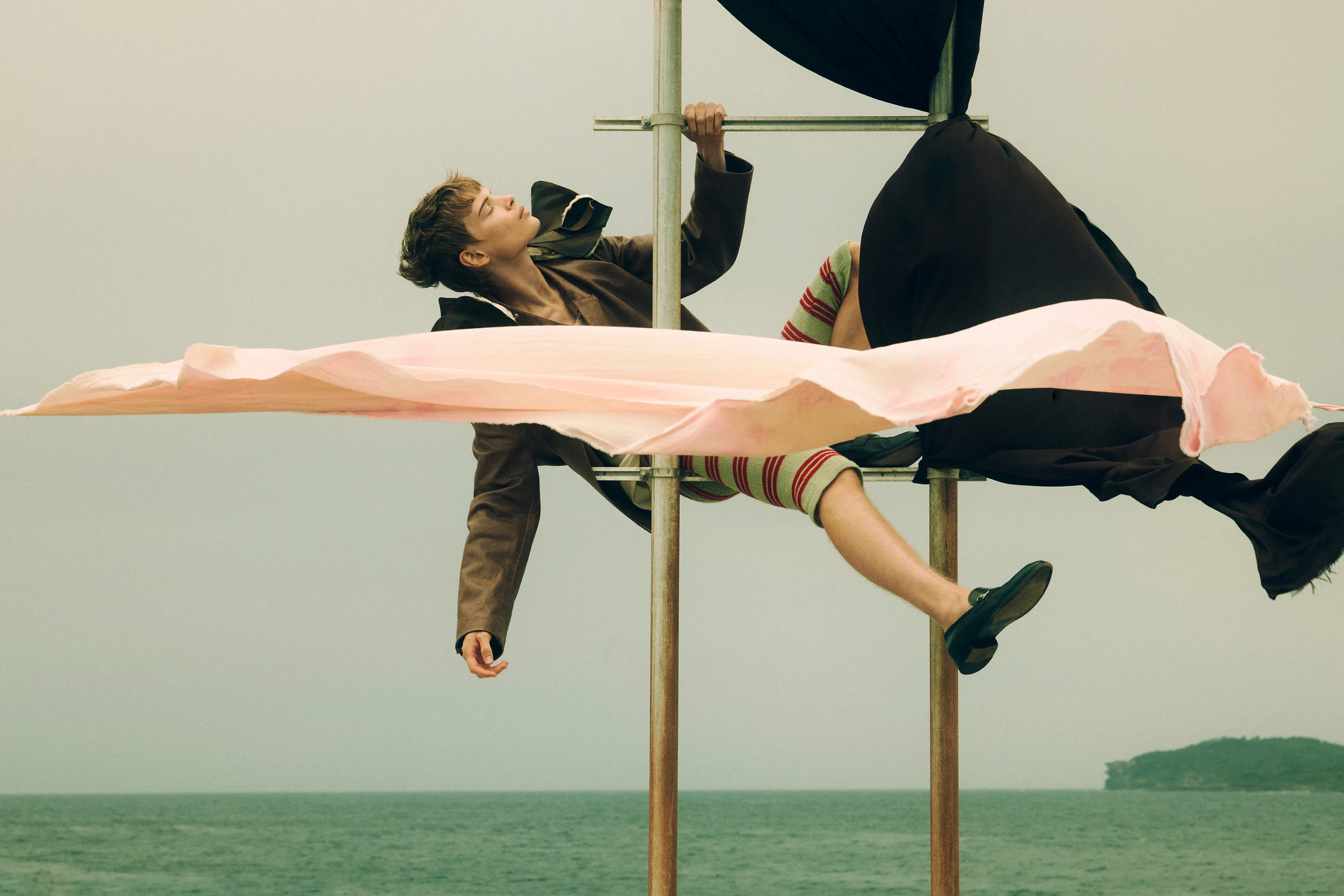
Kitty Yeung is a multi-talented director, producer, and editor based in Hong Kong, with a practice encompassing narrative films, music videos, and branded content. Her body of work stands out with experimental boldness and deadpan wit, an eye for the surreal details in everyday life, and culturally specific storytelling, often born from cross-disciplinary collaborations with musicians, dancers, choreographers, and visual artists. In this conversation, Kitty shares her approach to balancing creative ambition with the practical realities of production, finding the human core in brand briefs, navigating the speed and sharp humour of Hong Kong’s creative community, leaning into lived experiences and details that resonate beyond borders, and translating live performances and exhibitions into cinematic works for a new lease of life on screen.
You bring a strong mix of creative and practical experience to your projects, including directing, producing, cinematography, and editing. How does this inform the way you work as a director, from developing an idea to bringing it to life, especially when a project has an ambitious creative vision yet real-world constraints to consider?
The mix is actually very useful. Knowing how to produce, shoot, and edit means my left brain is constantly negotiating with my right brain. When I have a wild creative idea, the producer in me immediately opens an imaginary spreadsheet, while the editor in me asks, “Do we actually need this shot, or do we just enjoy suffering?” Sometimes that internal committee can make me a bit indecisive, because everyone in my head has a strong opinion. But most of the time, it forces me to be ruthlessly creative.
If you can’t build an entire world, maybe one very strange, very specific detail can suggest it better. Real-life constraints are boundary lines that force me to actually play the game, and hopefully play it well. They make me sharper, more inventive, and less lazy.


So, as a director, I work with both intuition and engineering. I want the emotional core to stay intact, but I also want the machine to run. Cinema is a magical art form, but unfortunately, it still involves logistics, schedules, and call sheets. The dream has to survive production.
Collaboration appears quite central to your work, while your experience across producing, cinematography, and editing gives you a close understanding of many parts of the production process. How do you bring through your directorial vision while creating an open creative space for collaborators and crew to contribute their own skills and ideas?
I care a lot about collaboration because film is too big and too strange to make well from a single brain. If I’m making a music video with an artist, I love it when they bring something I never could have invented myself. Usually, the song is already the sandbox – it sets the emotional world, the rhythm, the temperature – and then together, we dig for the buried treasure of what that can become visually.
It’s the same when I collaborate with choreographers, dancers, or artists from other disciplines. I really enjoy the collision of languages. I bring filmmaking, they bring their own embodied or spatial intelligence, and ideally, the result becomes something greater than 1+1. That’s the exciting part for me – not just translating one medium into another, but letting them contaminate each other in a productive way.
It’s the same with my crew. I usually set the emotional and visual compass for the project and make sure the vision stays intact, but the execution gets elevated by everyone else’s expertise. The ideal set for me is open, in the sense that the best idea can come from anywhere.
You’ve made films and video content about art exhibitions, installations, performances, and public spaces, including for Tai Kwun, where the original experience is live, spatial, and often presented for a limited period. When filming something designed to be experienced in person, how do you decide what to emphasise on camera and how to extend or transform that live experience into something that can exist beyond the space and beyond that particular moment?
When filming art, performance, or installation, I never try to pretend the camera can simply “capture” the live experience. That would be a little arrogant. Being in a space is physical, accidental, and temporal – your body is part of the work. A film is another experience entirely.


You can never truly replicate the feeling of physically standing inside an exhibition, a live performance, or a huge installation. If you just stick a camera on a tripod, you get a security tape, not a film. So I want to translate the spatial experience into a cinematic one, using framing and pacing to create a parallel piece of art that survives long after the physical exhibition is packed up. The job is not to make a copy of the event. It’s to create a second life for it – something faithful in spirit, but native to film.

The music video you directed for Still/Life by Hong Kong post-punk band David Boring is a hauntingly engrossing exploration of grief. The project also had a long and involved creative process, shaped in part by a two-day workshop together with the band and Butoh dancer and choreographer Tomas Tse. What led you to approach the process in that way, and how did the workshop help you arrive at the final concept and visual language of the video?
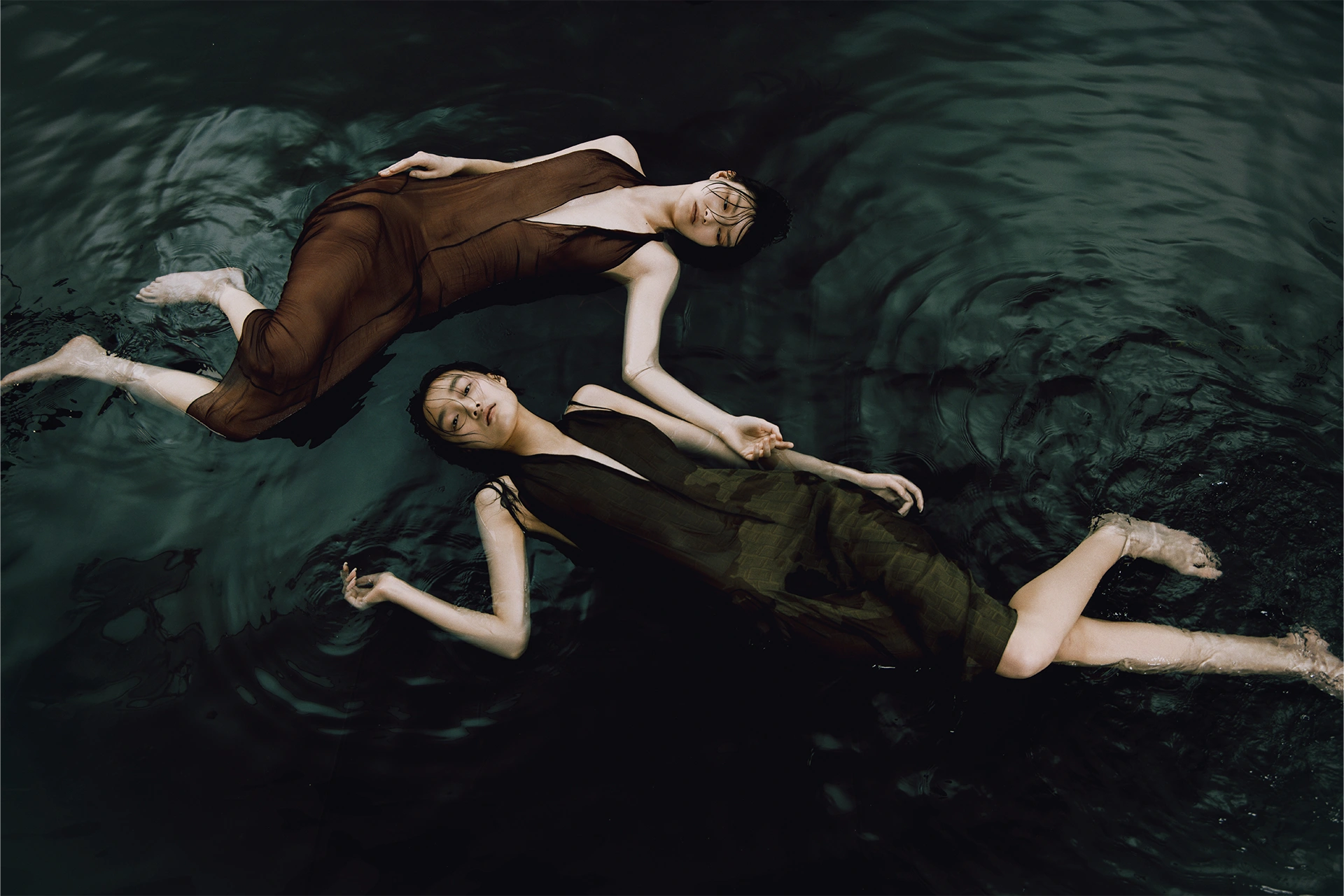
The music video follows an ethereal figure moving through a serene, moonlit forest, and it explores grief as something visceral, intimate, and deeply isolating. I was interested in loss not as an abstract emotion, but as something the body carries and performs almost against its own will.
That’s why a traditional storyboard-first approach felt completely wrong. Grief is messy and physical; it doesn’t move in neat, obedient beats. Before the workshop, I had already set the overall mood and tone for the piece, but bringing the performer Lau Jan, who is also the band’s vocalist, and choreographer Tomas Tse into a two-day Butoh workshop allowed us to bypass our overthinking brains and get straight to the body. It felt like the right beginning because it let us discover, rather than impose.
What I love about Butoh is that it allows the grotesque and the beautiful to exist in the same breath. Watching the movements emerge gave us a raw, unsettling, and deeply embodied visual language that we never could have arrived at just by sitting in front of a computer. From there, we designed the shots very specifically: camera movement, editing rhythm, and lighting all worked together to emphasise the body as dehumanised, twisted, and on the verge of body horror. I wanted the audience to witness not just sadness, but the physical vulnerability of trauma when it begins to distort the self.
Your video for JACE’s Pamper Ü was inspired by the Japanese film The Taste of Tea (2004), which is an interesting reference for the way it shows the surreal within everyday life through offbeat humour and a whimsical visual world. In the music video, that spirit comes through in nature, the local neighbourhood, and little moments of strange playfulness. What felt right about building this kind of world for the song, and how did you translate the cinematic influence into your own visual language?
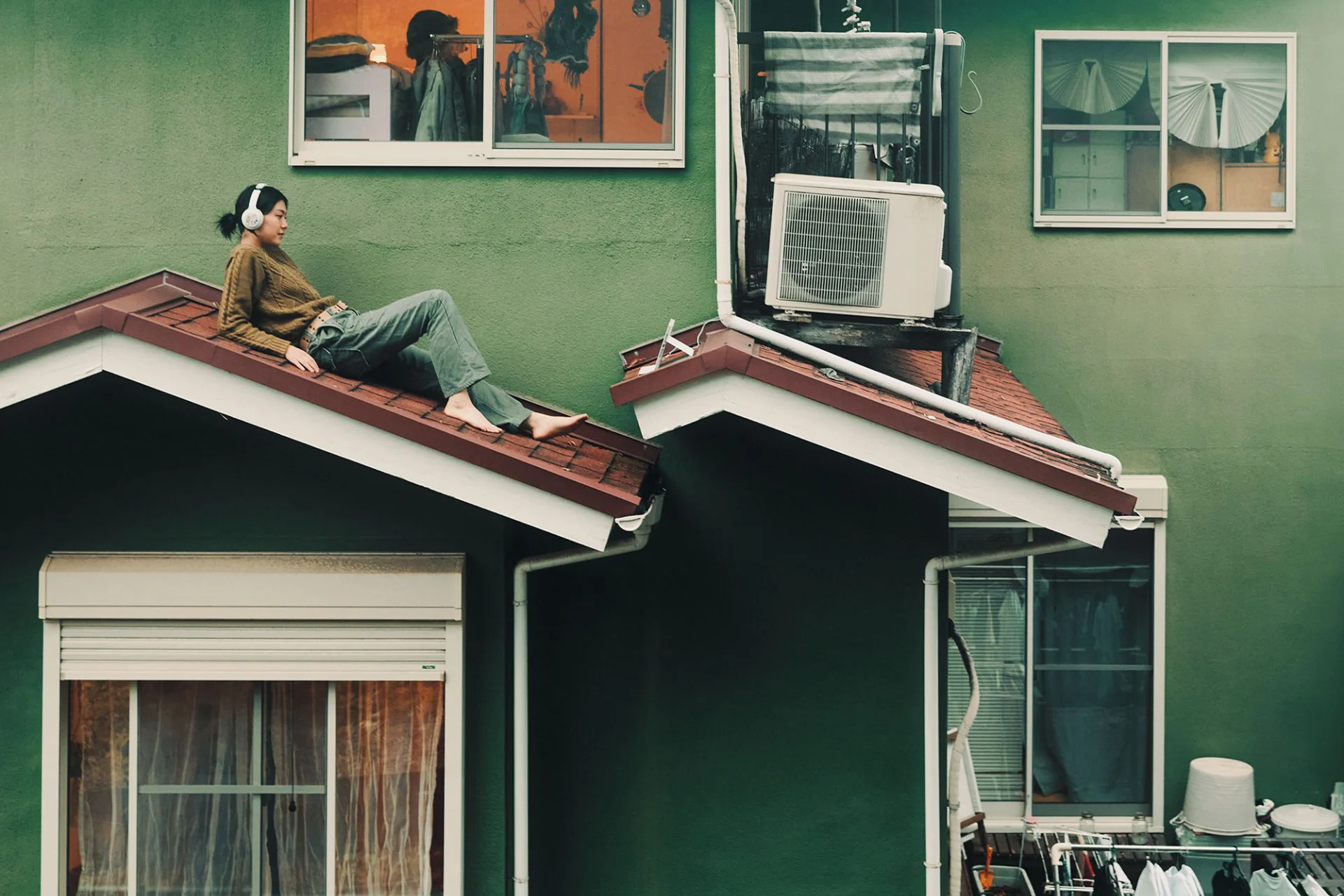
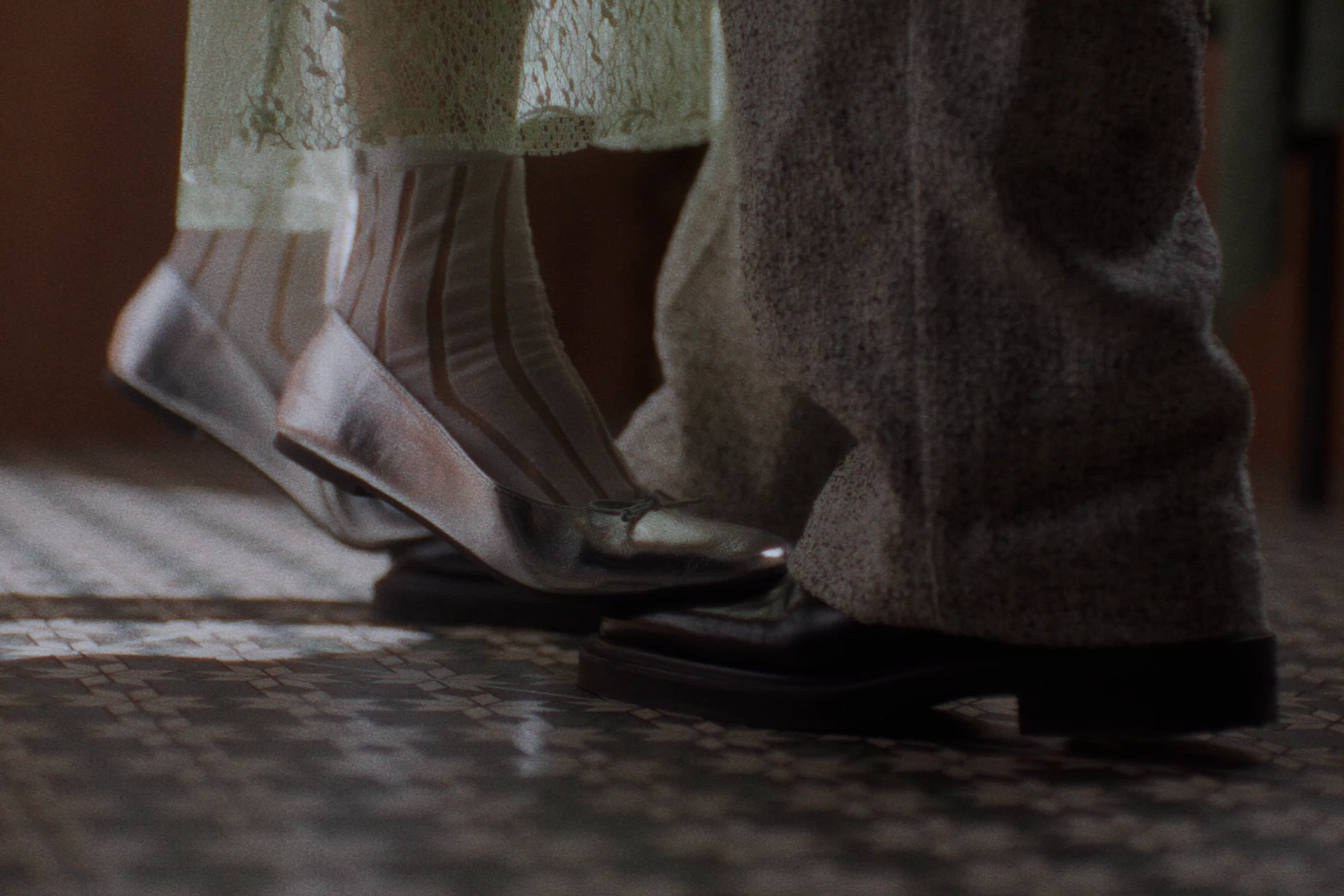
What I love about The Taste of Tea is that it treats everyday life as if it is already slightly enchanted, slightly ridiculous, and slightly off-axis, which is basically what living in Hong Kong feels like anyway. For the Pamper Ü music video, I wanted to pull that whimsical energy into our local streets, vintage salons, bits of nature, and all these ordinary spaces that become strange if you look at them with just the right amount of mischief. I like surreal moments most when they behave as if they are completely normal. That deadpan quality makes them funnier and, strangely, more moving.
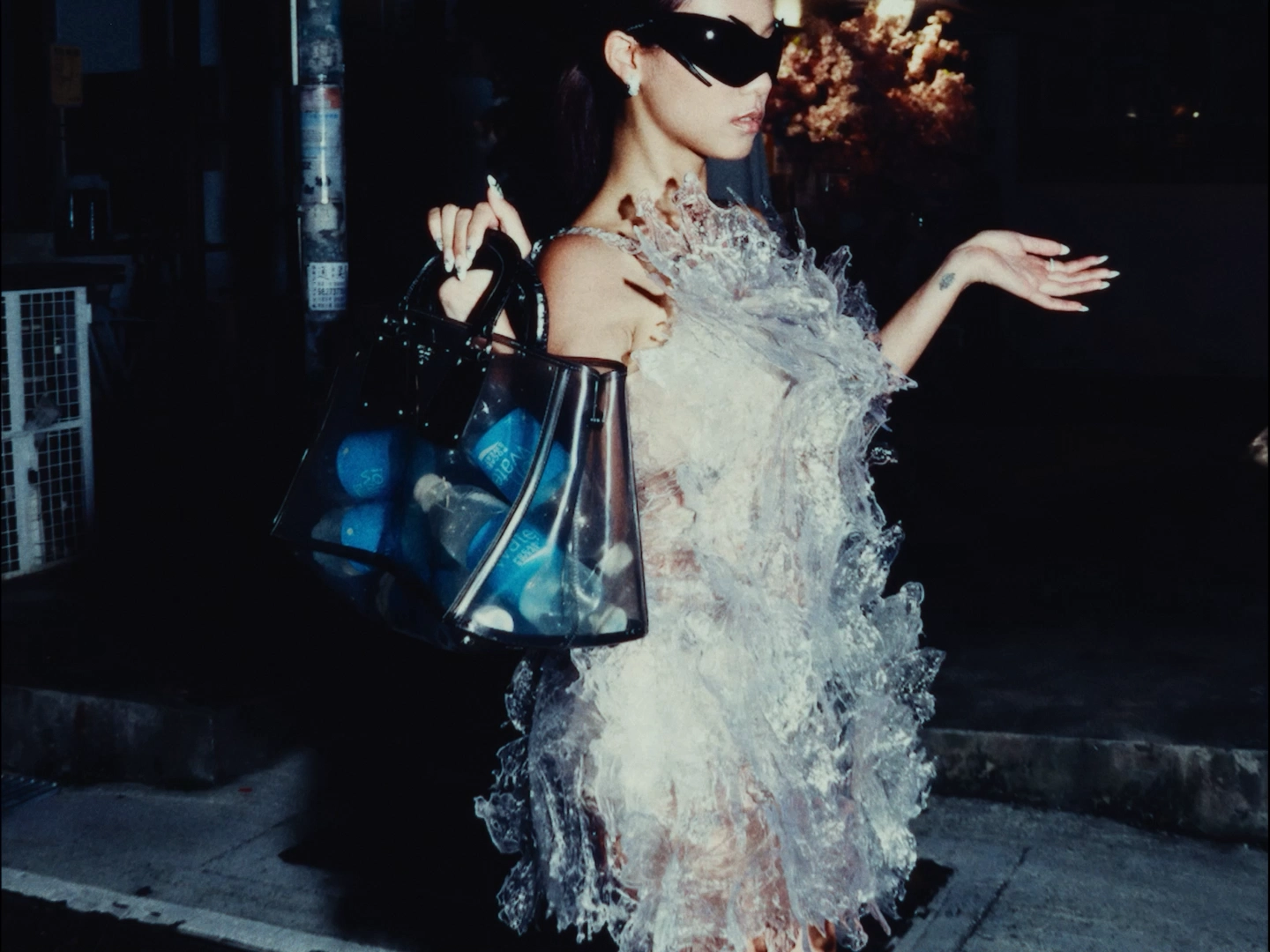
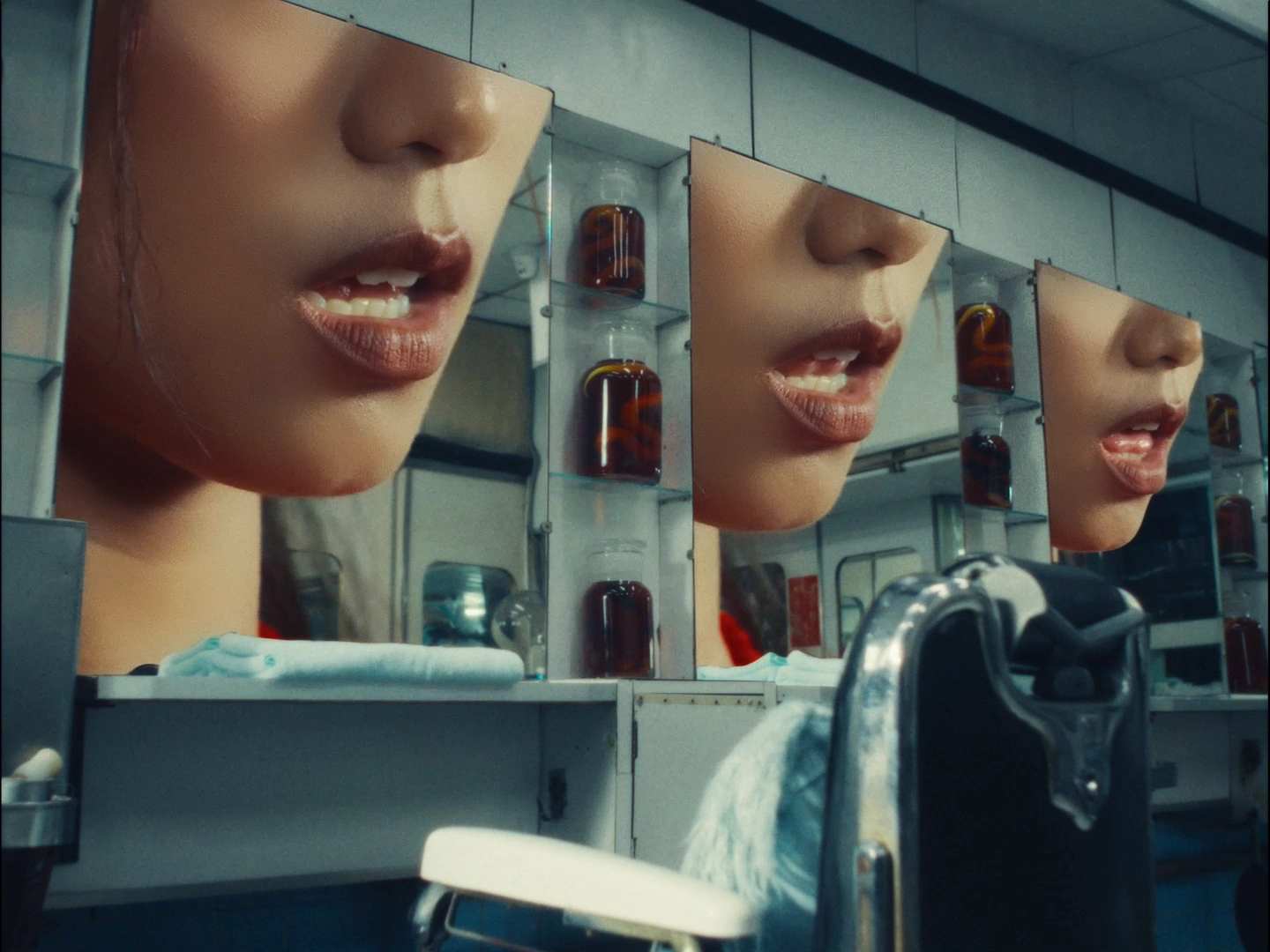
So we didn’t need heavy CG or a glossy fantasy world. We just needed little playful disruptions in familiar spaces. That way, the visual language could match the song’s playful, bouncy energy without feeling forced or overdesigned, and feel like a Hong Kong daydream.
Your film 《縊》 A Missing Scene From Floral Princess (2023) builds on a classic Cantonese opera story, incorporating traditional opera and modern dance elements. How did bringing those forms together help you explore the story’s themes, its strong female lead, and adapt the story in a fresh way for the screen?
Opera is so codified and heavily structured, while contemporary dance is fluid and emotionally naked. I’m drawn to that tension between forms, and bringing them together felt like a way to extend that same tension into the story itself – peeling back layers of Chinese history, gender, and the political atmosphere that still echoes through Hong Kong today.
In the classic Floral Princess, even within a very patriarchal framework, Princess Changping is a surprisingly strong female character. She moves with desire, conviction, and agency. I was interested in looking for alternative narratives within that traditional structure, searching for the small gaps that are not strictly heterosexual, not fully obedient to patriarchy, and not as fixed as they first appear. Those gaps are often where reinterpretation becomes possible.
Through collaborating with the young Cantonese opera playwright, composer, and actor Jason Kong, I learned that the original script omits the suicide scene of Changping’s father, the last Ming emperor, after the fall of the dynasty. That omission fascinated me. The absence itself opened up space for interpretation and imagination. It gave me room to think about power, collapse, mourning, and also to invite queer readings into the relationship between the emperor and the eunuch.
Alongside narrative films and music videos, you’ve also made some brand films and done commercial work such as for Apple. How do you approach collaboration on branded and commercial projects to ensure the creative direction feels distinctive while aligning with the brief and delivering what the project needs?
Branded work is an exercise in hardcore diplomacy and creative problem-solving. You have to satisfy the client’s brief and hit their messaging, while somehow still sneaking your artistic soul into the final cut.
I usually start by looking for the human core of the brief. Sometimes a brand says they want something “authentic,” which can mean six completely different things depending on who is in the room and how much coffee they’ve had. So I ask a lot of questions early on. I try to understand not just what they want to say, but what they actually mean, what they’re afraid of, and where the project’s personality might live.

Once you find that, it becomes much easier to shape a creative direction that feels distinctive without becoming self-indulgent. Once the client realises you aren’t fighting them, but rather elevating their message through a distinct, cinematic lens, they usually give you the trust to do something genuinely cool.
You previously served as Head of Production at Nowness Asia. Can you share some takeaways from that role about producing culturally specific stories for both regional and international audiences?
“Culturally specific” is actually the secret to “internationally resonant.” The more precise and grounded a story is, the more alive it becomes. Whenever you try to water down an Asian story so a global audience can digest it more easily, it usually loses its texture, its niches, and its actual reason for existing. It becomes what I can only describe as generic airport art. If you lean hard into the specific textures and truth of a region, audiences everywhere connect to its authenticity.
What kinds of films, artists, or creative voices tend to leave an impression on you, and what do you think helps some works resonate across borders?
I’m usually drawn to work that has a very clear inner weather, and to creators who aren’t afraid of tension, discomfort, or dark humour. I love filmmakers who can make a mundane conversation across a dining table feel like a psychological thriller. That kind of tonal control leaves a huge impression on me.
I’m a big fan of directors like Yorgos Lanthimos, Lee Sung Jin, Ruben Östlund, Alejandro González Iñárritu, and Thibaut Grevet – very different voices, obviously, but they all create work with a distinct emotional climate and a strong point of view. I’m especially drawn to filmmakers who don’t sand off the local edges or strange little niches in their work. Usually, those niches are where the electricity is. That’s where a unique voice starts to emerge.
I also think the work that travels best across borders is often the work that doesn’t rely entirely on dialogue to explain itself. Great work trusts images, bodies, silence, rhythm, and awkwardness. Some things should be understood slightly sideways. That’s often where art becomes memorable.
Can you share a little about Hong Kong’s creative culture and community through your eyes? What do you enjoy about creating and working here?
Hong Kong’s creative culture is chaotic, fast, and beautifully resilient. People here work at warp speed. Sometimes you’re still location-scouting right before the shoot happens, which is not always ideal for my blood pressure, but it does mean the city has trained everyone to think on their feet. Having worked overseas, I can say Hong Kong speed is unbeatable. If you need to pull off a miracle by tomorrow morning, a Hong Kong crew will somehow find a way.

What I love most is that grit and adaptability. But the downside is that clients can get too used to the speed and start forgetting that proper pre-production and post-production are not luxuries – they’re often exactly what would elevate the work. I deeply admire Hong Kong efficiency, but I also oppose the idea that everything should be done at emergency speed forever. Just because we can do it overnight doesn’t mean we should.
There’s also a particular humour here that I adore. People in Hong Kong are sharp, direct, unsentimental, and very funny in a way that punctures pretension immediately. I’m so used to that energy that sometimes when I work with foreign crews, the amount of small talk and ceremonial bonding feels almost anthropological to me. Hong Kong sharpness – that wit, speed, and refusal of nonsense – is something I really cherish.
Your earlier film Ephwaipi, a homophone of ‘FYP’ for Final Year Project, addresses social expectations, exploitative labour, and the pressures placed on young women. Looking back now, how do you think about fairness, integrity, and the kind of working culture you want to contribute to through your career?
Ephwaipi explored the crushing weight of expectations, and sadly, I think our industry still romanticises suffering far too easily. There’s still this myth that if you’re not exhausted, underpaid, and slightly emotionally broken, then maybe you’re not making “real” art.
Good art should challenge the audience, not traumatise the people making it.

I’m still ambitious. I love demanding work, I love high standards, and I love the thrill of trying to make something difficult happen. But I want to contribute to a culture where rigour and care are not seen as opposites.

You can make serious, beautiful, formally ambitious work without normalising disrespect, chaos, or exploitation. In fact, I think the work often becomes better when people are treated properly.
What kinds of stories, collaborations, or forms feel most exciting or full of potential to you at the moment? What would you like to explore next?
As with what I usually produce, I’m still really excited by forms that let different artistic languages collide – projects that sit between cinema, performance, choreography, visual art, and music, where the body, space, and image all argue with each other a little. I love that unstable territory where something doesn’t belong neatly to one discipline.
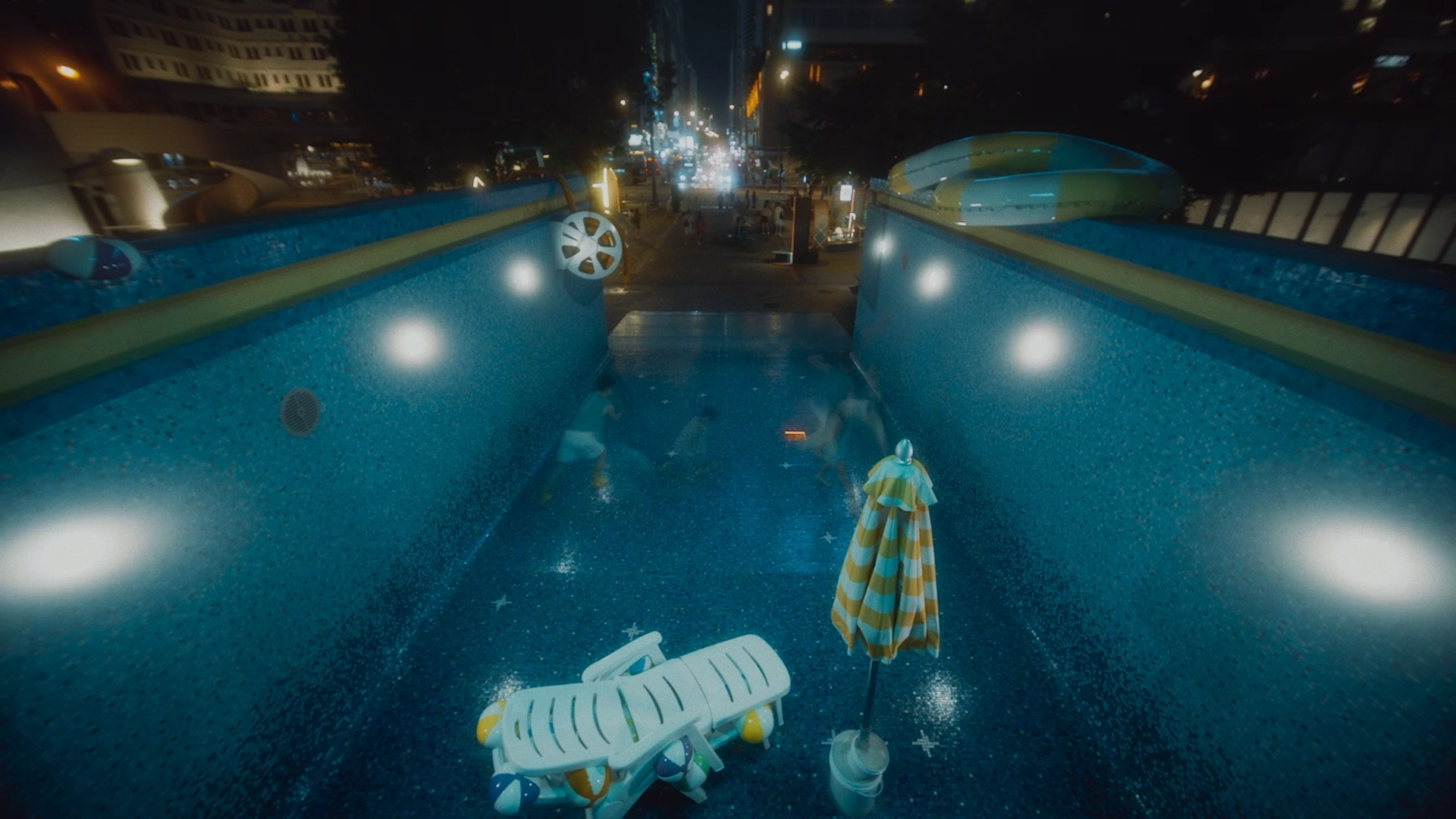
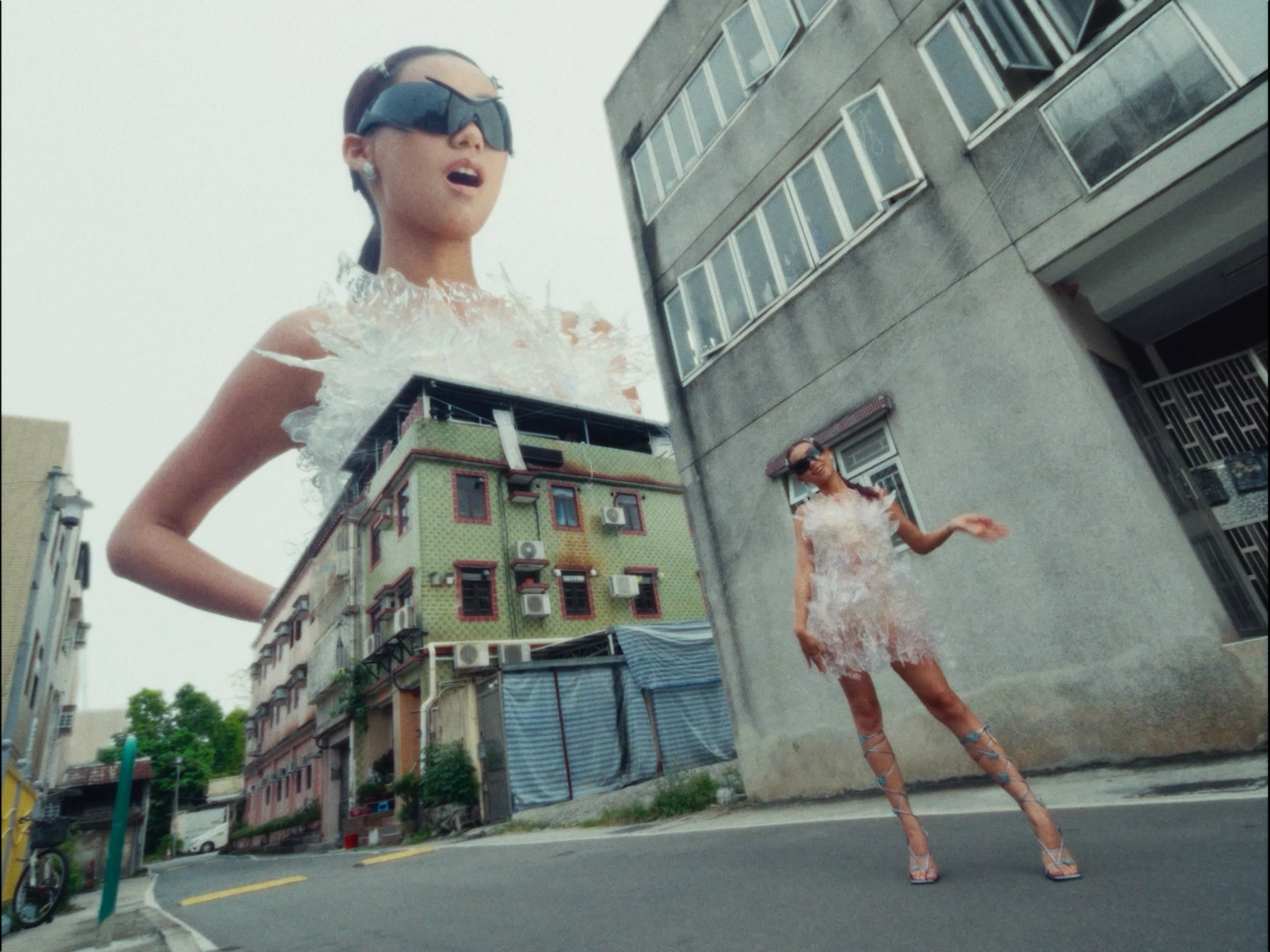
I’m also very interested in blending analogue textures with new technologies. Recently, in a music video I directed for Marf Yau called Rrrr, I used AI as part of the visual process to deform and warp old Hong Kong buildings into these living backdrops for the artist’s performance. I found that really exciting because the results felt surreal, but still deeply local, like familiar streets had been pushed into a new psychological dimension.
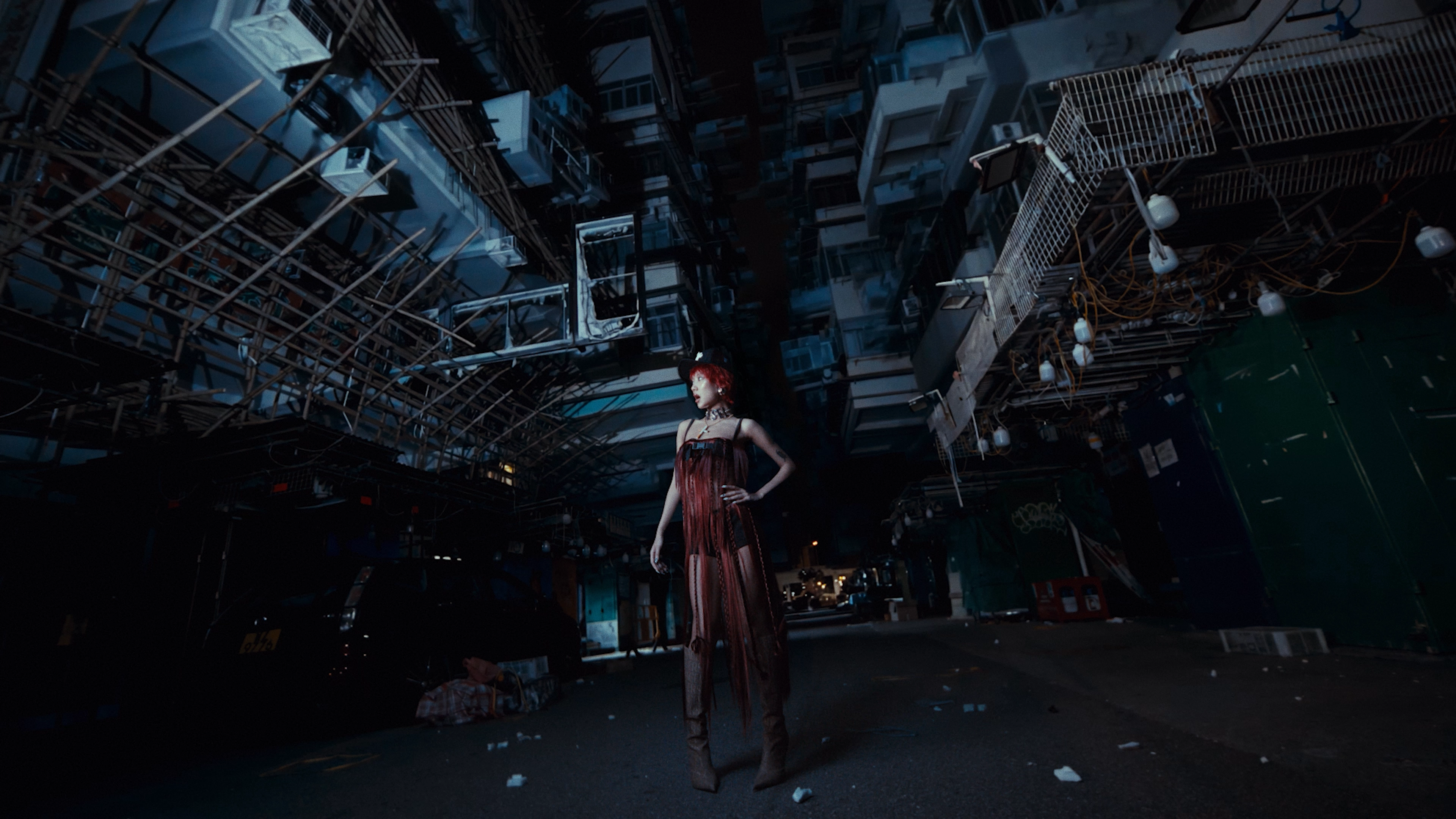

That’s the kind of space I want to keep exploring: mixed-media work, strange visual systems, highly specific local stories, and new ways of seeing the textures of the real world. Anything that lets me find poetry inside the chaos of daily life – and maybe mutate it a little – feels full of potential.